
What is the Difference Between In-Frame and Lay-On Kitchens?
If you’ve been shopping around for a new kitchen, chances are you’ve come across two terms that can feel a bit mysterious: in-frame kitchens and lay-on kitchens. At first glance, they might look similar—after all, they both involve cabinets, doors, and worktops. But peek a little closer, and you’ll see they’re built in very different ways.
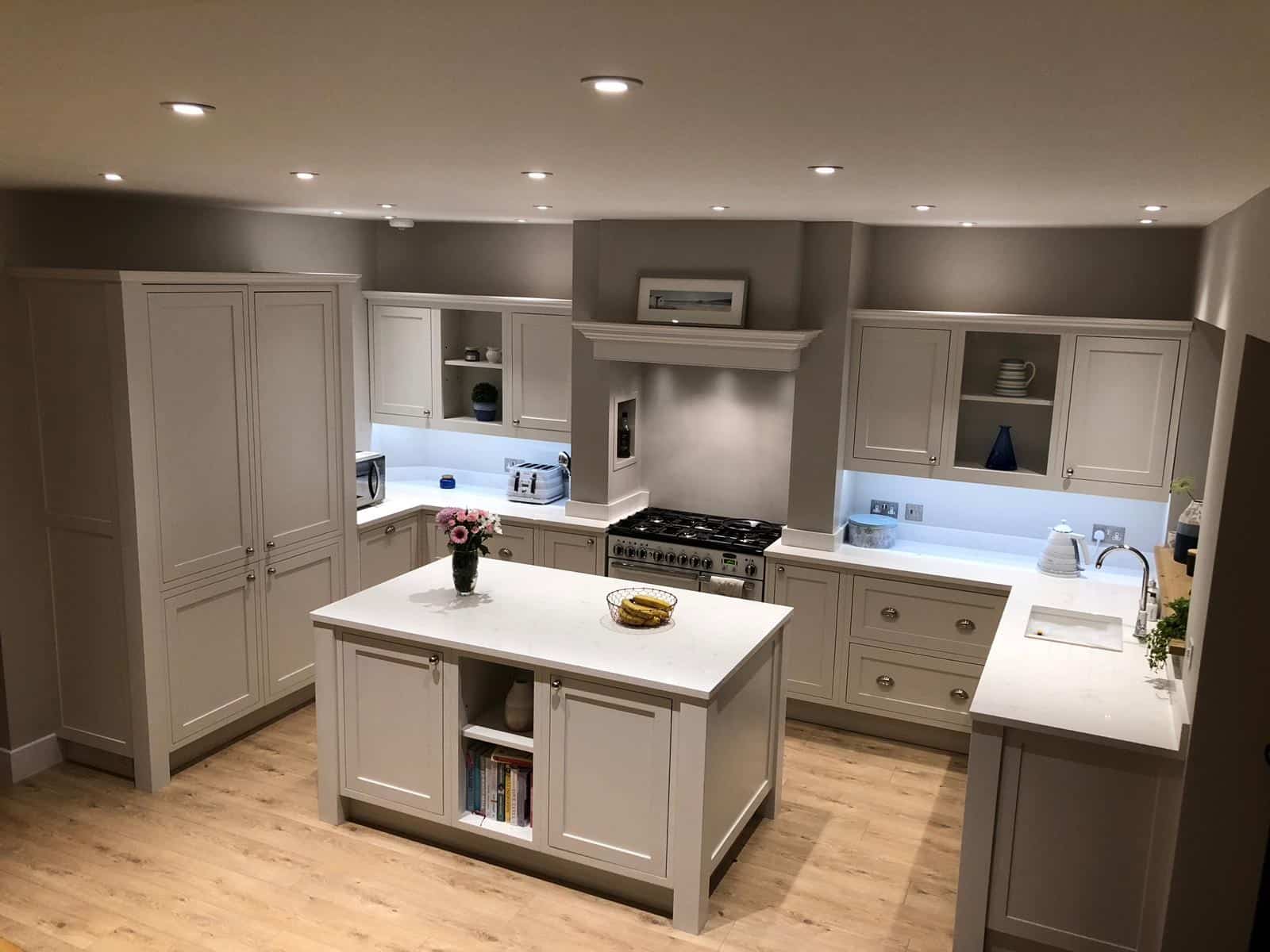
Here’s the short version: in-frame kitchens are all about traditional craftsmanship, where doors sit neatly inside a solid frame (think bespoke joinery and heritage homes). Lay-on kitchens, on the other hand, are more about sleek modernity, with doors that “lay on” top of the cabinet box, giving a smooth, contemporary finish.
Not sure which is right for you? Let’s break down each option so you can see the features, benefits, and practical details—without the jargon.
In-Frame Kitchens
In-frame kitchens follow a traditional build where a fixed frame is attached to the cabinet front and the doors fit neatly inside it. This precise construction creates a strong, tailored finish that’s associated with classic, high-quality joinery.
Key features and benefits
The framed design offers both strength and style, making in-frame kitchens a favourite for those who value durability and elegance.
Strength & durability – The frame keeps doors aligned, even with heavy use.
Timeless look – The outline creates a classic, high-end appearance.
Customisation – Often handmade with flexible colour and finish options.
Luxury feel – Precision joinery provides a polished, bespoke effect.
Pro Tip: Pick in-frame if you want your kitchen to feel like crafted furniture rather than standard cabinetry.
Typical cost considerations
Because of the materials, craftsmanship, and precise installation, in-frame kitchens are usually more expensive than lay-on alternatives. However, the durability and enduring appeal often justify the spend.
Materials & craftsmanship – Solid frames and detailed finishing raise costs.
Fitting time – Installation takes longer due to precision requirements.
Long-term value – A higher upfront spend balanced by decades of service.
Pro Tip: Treat an in-frame kitchen as a one-time investment that adds both practicality and value to your home.
Lay-On Kitchens
Lay-on kitchens, also known as overlay style, take a simpler approach. The doors are fixed directly on top of the cabinet box, fully covering the unit face. This design gives smooth, uninterrupted lines and a versatile modern look.
Key features and benefits
Lay-on designs are favoured for their practicality and contemporary feel. The absence of a frame makes them efficient, flexible, and accessible to a wider range of budgets.
Streamlined look – Doors fully cover the cabinet, giving a sleek finish.
Wide choice – From glossy lacquers to wood-effect laminates, there’s a finish to suit any style.
Space efficiency – With no frame reducing access, you gain a touch more storage.
Budget-friendly – Generally less costly while still offering durability.
Pro Tip: Lay-on kitchens are perfect if you want maximum style options without stretching your budget.
Typical cost considerations
Affordability is where lay-on kitchens really stand out. Their straightforward build and quicker installation make them a cost-effective solution.
Lower manufacturing costs – Simpler construction keeps prices down.
Faster fitting – Easier to install since there’s no frame to work around.
Budget flexibility – Available from flat-pack ranges to bespoke designs.
Pro Tip: If you’d like room in the budget for premium appliances or worktops, a lay-on kitchen is a smart way to balance costs.
Key Differences Between In-Frame and Lay-On
Now that we’ve looked at each style individually, it’s easier to see how they compare side by side. The main differences come down to appearance, practicality, cost, and maintenance—four areas that usually shape a homeowner’s decision.
Appearance and style
The two designs carry very different personalities.
In-frame kitchens: Heritage-inspired, with visible frames and a crafted furniture feel. They work beautifully in period homes or spaces where character and tradition matter.
Lay-on kitchens: Modern and minimal, with doors that create a smooth, uninterrupted surface. Perfect for contemporary, Scandi, or clean-lined interiors.
Pro Tip: If you want timeless charm, go in-frame. For a sleek, design-led finish, lay-on delivers.
Practicality and storage
Functionality is where subtle design differences show up in daily use.
In-frame kitchens: The frame provides strength but slightly reduces access to cupboard openings. Not a dealbreaker, but noticeable in smaller kitchens.
Lay-on kitchens: No frame means full-width access and a touch more usable space inside drawers and cupboards.
Pro Tip: In compact kitchens, lay-on designs can help you make the most of every inch.
Cost comparison
Price often plays a big role in choosing between the two.
In-frame kitchens: Typically more expensive due to solid frames, intricate joinery, and longer installation times. They’re best viewed as an investment.
Lay-on kitchens: Generally more affordable, with options ranging from flat-pack to bespoke. They give flexibility without a luxury-level outlay.
Pro Tip: If budget is tight but style is key, lay-on offers great value. If you’re thinking long-term, in-frame is worth the extra spend.
Maintenance and updates
How each kitchen ages is another point to weigh up.
In-frame kitchens: Built to last, but may need the odd hinge adjustment or paint refresh to stay pristine.
Lay-on kitchens: Easy to update—swap out doors, change finishes, or refresh colours with minimal hassle.
Pro Tip: Choose in-frame if you want a “forever kitchen.” Opt for lay-on if you like the idea of easy updates over time.
Hybrid Option: In-Frame Effect
If you love the elegance of in-frame kitchens but prefer the practicality of lay-on, there’s a clever middle ground: the in-frame effect. This style recreates the framed look through design details—like painted edging or applied mouldings—without requiring the complex joinery of a true in-frame build.
What it is
The in-frame effect uses standard lay-on cabinetry as its base, but adds styling touches that imitate the framed appearance. The result? A kitchen that looks traditional at first glance yet is simpler and more cost-effective to install.
Pro Tip: It’s a smart way to capture the premium look of in-frame while keeping the budget closer to lay-on territory.
Who it suits
This option is a great fit if you:
Want the charm of in-frame but at a lower price point.
Prefer quicker installation and easier upkeep.
Like the flexibility of combining modern cabinet internals with a classic exterior.
Pro Tip: Think of the in-frame effect as a “best of both worlds” solution—ideal if your heart says classic but your budget (or lifestyle) says practical.
How to Decide
Both kitchen types have clear strengths, but the right choice depends on how they fit your home, budget, and lifestyle. Think less about which is “better” and more about which matches your needs and long-term plans.
Matching style to your home
Your kitchen should complement the architecture around it.
In-frame kitchens suit cottages, period homes, and classic interiors, where traditional joinery feels right at home.
Lay-on kitchens shine in modern apartments and open-plan spaces, thanks to their clean, minimal finish.
Pro Tip: Ask yourself: Do I want my kitchen to look like timeless furniture or a contemporary design feature?
Budget vs long-term value
Money often tips the scales when deciding between the two.
Lay-on kitchens: Affordable upfront, with plenty of stylish options across different budgets.
In-frame kitchens: A higher initial cost, but built to last decades, making them a long-term investment.
Pro Tip: If short-term affordability matters most, go lay-on. If longevity and value over time matter more, in-frame pays off.
Durability and lifestyle needs
Daily use is where the differences really show.
In-frame kitchens: Robust and long-wearing—ideal for busy households that put their kitchen through heavy use (though they may need the odd paint refresh).
Lay-on kitchens: Low-maintenance, easy to update, and flexible if you like changing finishes later on.
Pro Tip: Think of in-frame as your “forever kitchen” and lay-on as your “adaptable kitchen.” Which suits your lifestyle better?
Conclusion
In-frame and lay-on kitchens each bring something unique to the table. In-frame delivers heritage style, strength, and longevity—perfect if you want a “forever kitchen” with timeless character. Lay-on offers modern lines, affordability, and easy updates, making it ideal if you want flexibility and a fresh, contemporary look.
If you’re still unsure which route to take, working with a specialist makes the decision easier. At Thomas Matthew Kitchens and Furniture, you’ll find expert guidance and beautifully crafted options in both styles. Whether you’re leaning toward the solid craftsmanship of in-frame or the sleek practicality of lay-on, their team can help design a kitchen that fits your home, budget, and lifestyle perfectly.